
Amazon SUP Tour

Piranha Fishing in the River of Rivers on a SUP Board
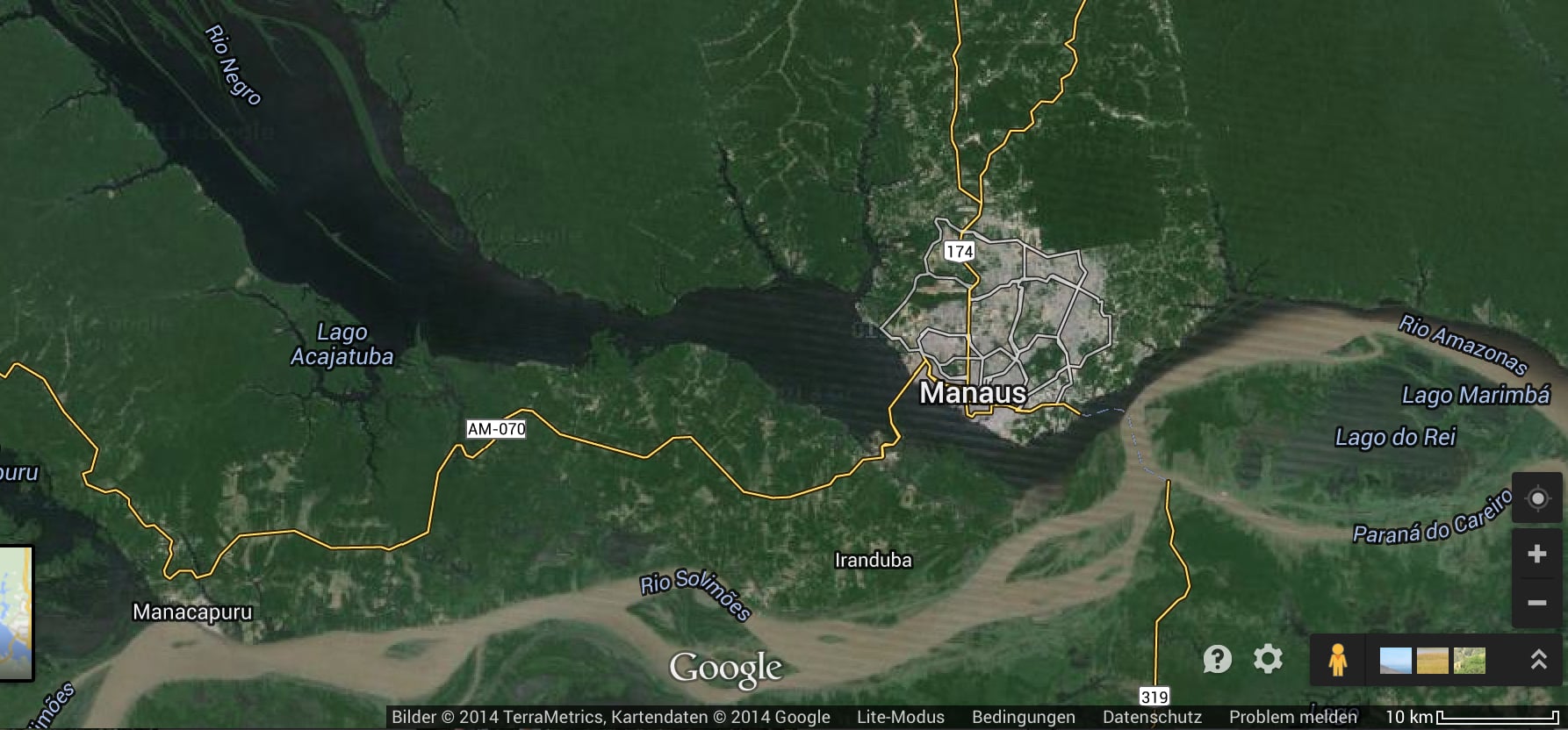
The adventure begins in Manaus, an old colonial metropolis, slightly chaotic yet somehow beautiful. Beyond it, the rainforest begins. We want to go where the Rio Negro and Rio Solimões merge to form the Amazon.
The river of rivers is up to 200 kilometers wide and almost 6,500 kilometers long. And thanks to inflatable boards, stand-up paddleboarding is now possible almost everywhere.
Our guides are Stefan, a German expatriate, and his colleague John. John is a true Brazilian who knows the Amazon intimately. He learned survival techniques in the rainforest during his military service. Since there is no cell phone reception or internet in the jungle, everything must be well-organized in advance.


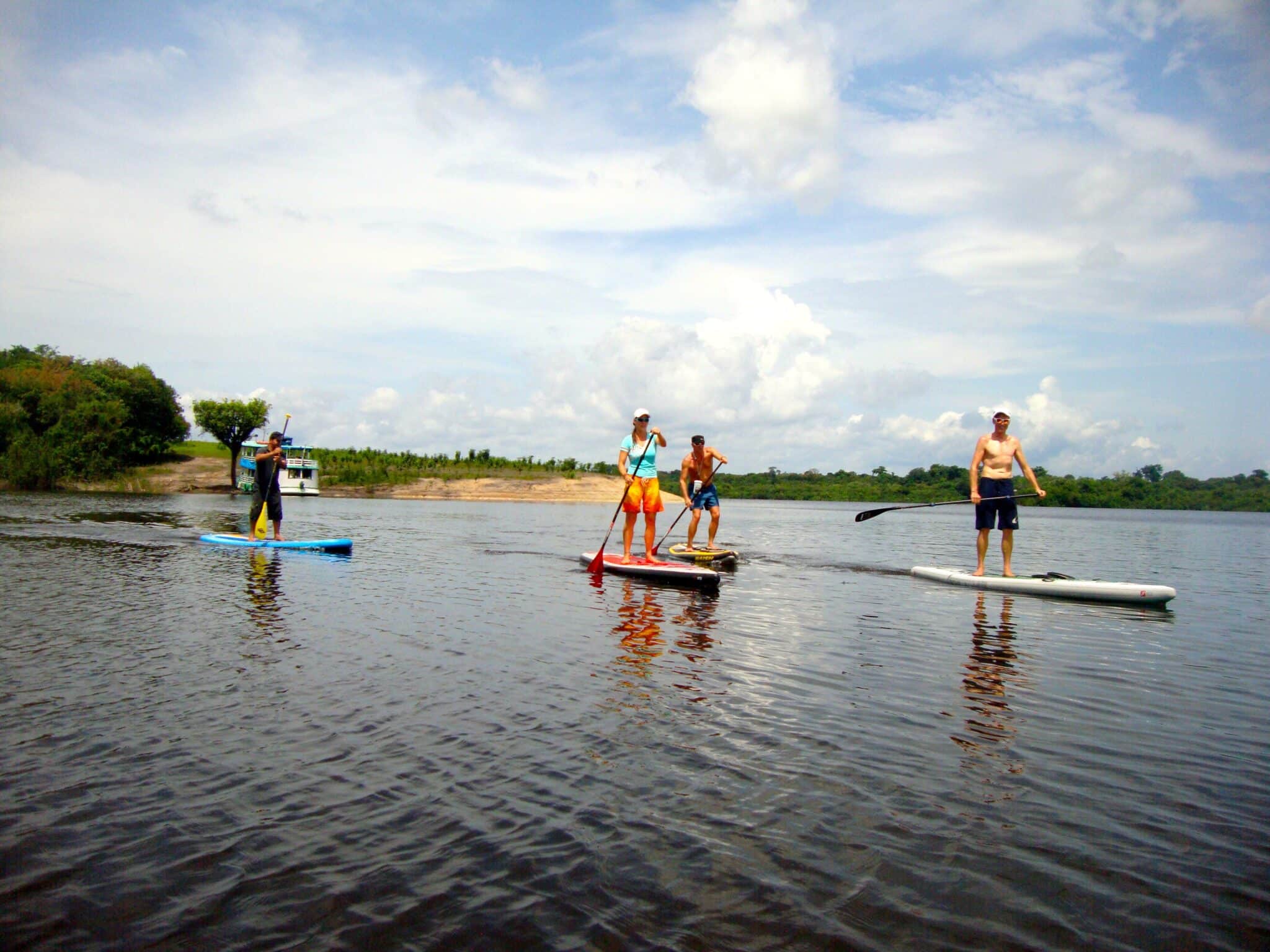
How dangerous is stand-up paddleboarding on the Rio Negro?
You absolutely should not attempt it on your own. You could get lost in the maze of side arms and channels – and spending the night in the jungle is not advisable due to the numerous animals. Alligators, caimans, anacondas, and ravenous fish like piranhas lurk in the water. The forest floor is full of venomous animals. Of course, animals are naturally shy and generally flee. But...



On the other hand, the hospitality of the Brazilians is simply overwhelming. We often had chats with hands, feet, and the few Portuguese phrases we knew. The atmosphere was always exuberant. We introduced ourselves as citizens of the country "Sete para un, 7:1." This statement evokes either loud laughter or great shame. It refers to the result of the 2014 World Cup semi-final match. If we had been among bad losers, we would have ended up as piranha bait by now. The Brazilians, however, are not resentful and take it with good humor. They rejoice with us over the won World Cup. "Yeah, yeah, just not Argentina," the fishermen said.
The jungle is loud. Monkeys and strange birds in the trees noisily make their presence known. Alligators and snakes are visible in the water. But no one admits to feeling fear, logically.
Just three days earlier, I had spoken with a couple from Swabia, casually remarking that the Amazon was to the local population what the Spreewald is to the Sorbs. As soon as a caiman at least 1.50 meters long ran into the water right next to me, I revised this ill-considered statement.


Impressive Canoe Tour
But I will not forget the canoe trip. We felt like explorers. A break at the first river hotel: a small terraced house on stilts at the edge of the rainforest with the charm of a small jungle lodge. Terrace, kitchen, five rooms and bathrooms, all very simple, but clean and cozy. After a few 19 Travel 18 drinks and good food consisting of fish, vegetables, rice, and fruit, we chatted late into the night. Shortly after 4 AM, I was woken by a rooster. He must have had good friends in the neighborhood. Now, what felt like ten other roosters crowed from all directions. Around 160 people live in the village. They keep chickens behind their houses. After breakfast, there was thunder and rain. Both were so loud that any conversation was impossible. Nevertheless, dinner still had to be caught. We fished with bamboo poles, fishing line, and a wire attached to a hook.
We used fresh beef as bait. As a child, I had learned to be quiet while fishing. Here, the fish are attracted by noise on the surface. In less than five minutes, we had caught the first piranha. But it could only end up in a soup. By the way, even small specimens have immense biting power. In the following days, we repeatedly encountered men missing fingertips, fingers, or even a hand. The most famous fish in the Amazon region is called Piracuru. It resembles a catfish and grows up to 2.50 meters long. It sucks its food into its mouth with lightning speed using a vacuum. White dolphins came right up to the pier and took the freshly caught fish. Locals say that a white dolphin is the father of an illegitimate child. Different countries, different customs...


Fascinating Nature & Biodiversity
Our guides explained to us how to survive in the jungle. Almost all forest fruits are at an unreachable height, and you have to rely on everything found on the ground. For testing, we grilled a few fat grubs from an old tree bark. They tasted like peanut puffs. But you can also climb trees. For foraging and sleeping. This is not easy for the inexperienced.
The huge butterflies flying through the dense jungle are a sight to behold. For the last day, a typical Amazonian wooden boat with two decks was chartered. It was to take us and our luggage downstream back to Manaus. We temporarily took the helm of the vessel and fished from on board. The historical sites we visited on the banks of the Rio Negro were interesting, and an abandoned former prison with a leprosy hospital left in the wilderness was spooky.
Shortly before sunset, we passed under the 3.5-kilometer-long Ponte Rio Negro, Brazil's most expensive and longest bridge, an impressive structure. The river "narrows" at this point to about 2.7 kilometers. We reached the port of Manaus only after dark.
Conclusion: Pure adventure in a dreamlike world.
- Choosing a selection results in a full page refresh.
- Opens in a new window.